
Court Grants Preliminary Injunction in COE Lawsuit, Finds U.S. Department of Education Failed to Follow the Law
January 16, 2026 — by Terrance L. Hamm

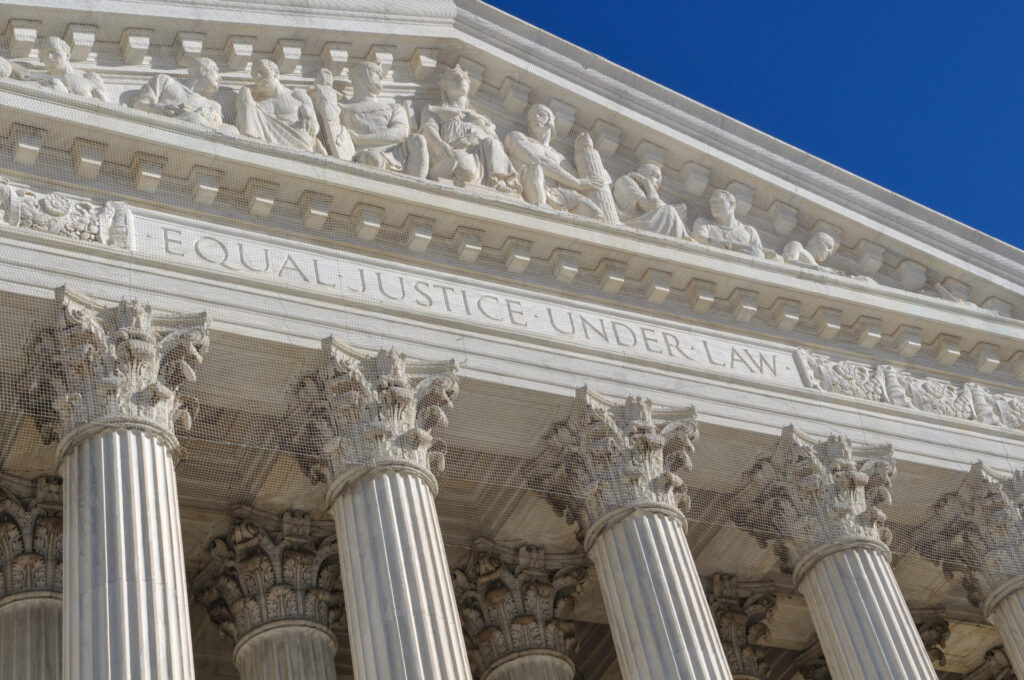
WASHINGTON, D.C. — The Council for Opportunity in Education (COE) applauds a ruling by the U.S. District Court for the District of Columbia granting COE’s motion for a preliminary injunction against the U.S. Department of Education challenging the Department’s denial and discontinuation of more than 100 Federal TRIO Program (TRIO) grants.
In a 39-page memorandum opinion issued by Judge Tanya S. Chutkan, the Court found that the Department of Education failed to follow required statutory and regulatory procedures when it denied applications for new Student Support Services (SSS) grants and discontinued other TRIO grants mid-cycle. The Court concluded that COE is likely to succeed on the merits of multiple claims, including that the Department violated the Administrative Procedure Act and failed to comply with legally mandated processes under federal law.
As part of the ruling, the Court vacated the Department’s notices of non-selection and non-continuation for the affected COE member institutions, enjoined the Department from enforcing those decisions, and ordered the Department to reconsider the grants in accordance with applicable laws, regulations, and procedures.
“Today’s ruling is an important victory for fairness, transparency, and the rule of law—and, most importantly, for the students TRIO serves” said COE President Kimberly Jones. “While this is not the end of the case, it is a powerful and encouraging first step that protects programs from harm and reinforces the integrity of the TRIO grant process.”
The Court emphasized that the Department’s actions were impermissibly vague, procedurally deficient, and inconsistent with governing statutes and regulations, including the Higher Education Act, the General Education Provisions Act, and federal civil rights laws. The Court also made clear that agencies must articulate rational explanations for their decisions and follow required procedures before denying or discontinuing federal education grants.
This ruling represents the latest development in a legal challenge COE initiated in September 2025, when the organization filed litigation on behalf of its members impacted by the U.S. Department of Education’s unprecedented refusal to award or continue more than 100 TRIO grants nationwide. As COE outlined at the time, the Department’s actions constituted one of the most sweeping disruptions to TRIO in the program’s history—redirecting tens of millions of dollars in congressionally appropriated funds and depriving tens of thousands of low-income, first-generation students, including veterans and students with disabilities, of critical college access and success services.
In October, COE’s lawsuit received significant national support when 21 states and the District of Columbia, led by Nevada and Massachusetts, filed an amicus curiae brief urging the court to halt the Department’s actions and emphasizing the harm to students, state economies, and the nation’s workforce if TRIO programs were allowed to be unlawfully dismantled. In December, Judge Tanya S. Chutkan heard COE’s motion for a preliminary injunction, during which COE presented evidence demonstrating the Department’s failure to follow required statutory and regulatory procedures. The Court’s decision granting the preliminary injunction marks a critical early victory in the case—but it is not the final resolution.
The Court’s order preserves the status quo while the case moves forward and requires the Department of Education to take steps to comply with federal law as it reconsiders the affected grants. COE looks forward to continuing to litigate this case and securing lasting relief that protects TRIO programs nationwide and ensures students receive the support Congress intended.
“This ruling is a positive and necessary first step,” stated COE Executive Vice President, Aaron Brown. “We remain committed to seeing this case through and to defending the Federal TRIO Programs that have opened the doors of opportunity for millions of low-income, first-generation students.”
For more information about the Federal TRIO Programs, visit www.coenet.org.
Media Inquiries
For media inquiries or to arrange an interview, please contact Terrance L. Hamm, vice president for communications and marketing at COE via email at [email protected] or call (202) 347-7430.
More News & Impact
-
Blog
Alumni Leaders Reflect on the Power of Opportunity at Capitol Hill Lunch Briefing
by Terrance L. Hamm
-
Blog
When Policy Becomes Personal: My Journey as a Wolanin Congressional Intern
by Brianna Mendelson
-
Blog
TRIO Future Leaders Summit Ignites Passion and Purpose in First-Generation Students Nationwide
by Terrance L. Hamm
-
Blog
Why Trump’s Budget Proposal Betrays a Generation of Low-Income College Students
by Alejandra Campoverdi and Aaron Brown, Ph.D.
-
Press Releases
New Report from Pell Institute Reveals How Black, Latinx, and Indigenous Students Perceive the Value of College Degrees
October 16, 2024
-
Blog
U.S. Representative Adriano Espaillat Addresses Diversity and Education at COE Annual Conference
by Terrance L. Hamm
-
Press Releases
The Council for Opportunity in Education Announced 2024 National TRIO Achiever Award Recipients
August 9, 2024
-
Blog
Balancing Acts: 2024 Wolanin Intern and Mother of Four Recalls Her Journey to Capitol Hill
by Ni’Aisha Banks
-
Blog
Demystifying Graduate School: A Guide for First-Gen BIPOC and Nontraditional Students
by Yvette Martinez-Vu and Miroslava Chavez-Garcia
-
Blog
Empowering Excellence: A TRIO Program’s Journey to Streamlined Success with empower™
by Terrance L. Hamm
-
Blog
Unleashing the Roar: A STEAM Symposium in Celebration of the Jurassic Park 30th Anniversary
by Trauvello Stevenson
-
Press Releases
National First-Generation College Celebration Honors First-Generation Student and Alumni Accomplishments on November 8
October 30, 2023
-
Blog
Breaking Barriers in Finance: The Impact of TRIO on Student Support Services Alumna Ashley Thomas
by Holly Hexter, Neve Dole
-
Press Releases
Council for Opportunity in Education Appoints Aaron Brown as Executive Vice President
July 17, 2023
-
Press Releases
The Council for Opportunity in Education Announces 2023 National TRIO Achiever Award Recipients
June 30, 2023
-
Blog
Research Reveals Ways to Improve Mental Health Support for First-Generation Students
by Holly Hexter
-
Press Releases
President Biden Continues to Prioritize Federal TRIO Programs in FY 2024 Budget
March 10, 2023
-
Blog
Mason Award and TRIO Family Award Winners Celebrate Lives Changed for the Better
by Maura Casey
-
Press Releases
Council for Opportunity in Education Board of Directors Unanimously Chooses Kimberly A. Jones as Its Third President
September 21, 2022
-
Press Releases
Record Number of Bipartisan Representatives Call to Prioritize Funding for Federal TRIO Programs
April 27, 2022
-
-
Press Releases
Council for Opportunity in Education Partners with Nucleus to Host Pitch Competition for Student Entrepreneurs
April 24, 2022
-
Press Releases
We Applaud Senate Resolution Recognizing National First-Generation College
April 19, 2022
-
Press Releases
COE Hosts Education Secretary Cardona to Facilitate 2021 Book Club Discussion with TRIO Students Nationwide
July 28, 2021