
The Council for Opportunity in Education Applauds 21 States and the District of Columbia for Defending TRIO Students in Federal Case Against the U.S. Department of Education
October 28, 2025 — by Terrance L. Hamm

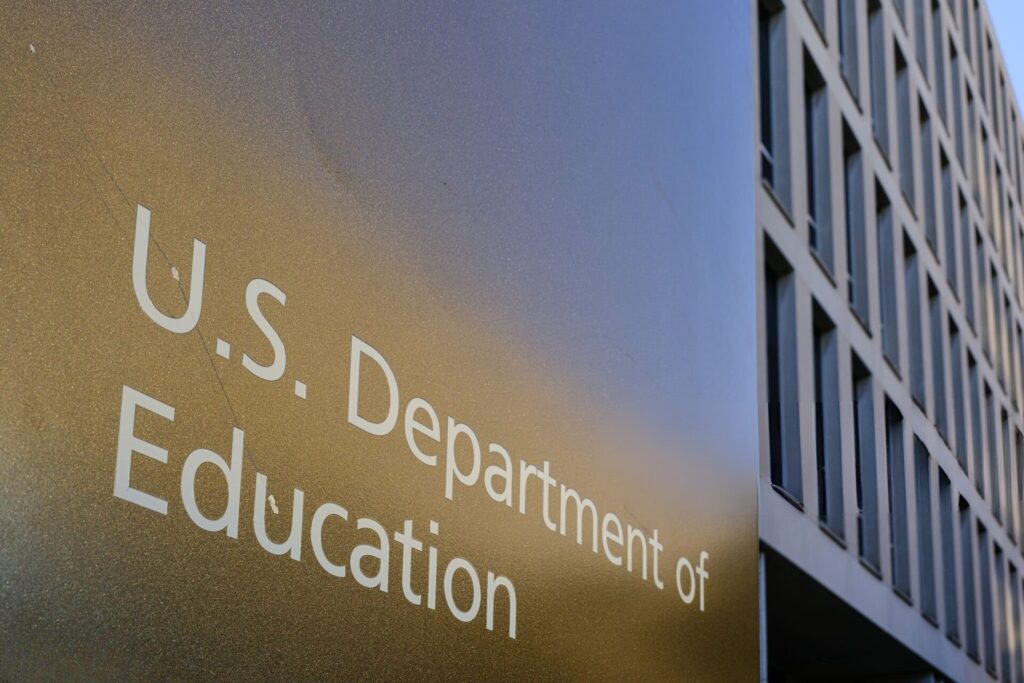
WASHINGTON, D.C. — The Council for Opportunity in Education (COE) today commended 21 states and D.C.—led by Nevada and Massachusetts—for filing an amicus curiae brief supporting COE’s lawsuit against the U.S. Department of Education. The brief, submitted in the U.S. District Court for the District of Columbia, underscores the national importance of TRIO programs in sustaining an educated workforce and advancing economic growth.
In their filing, the states argue that the abrupt cancellation of more than 100 TRIO grants this year threatens to undermine decades of progress in college access and completion—jeopardizing both students’ futures and states’ long-term economic vitality. The brief includes several central arguments to support these points. Specifically, the brief argues that:
- States rely on an educated workforce to sustain economic growth.
- TRIO programs serve the public interest by preparing students for high-need careers.
- The loss of these programs harms the public interest by eliminating a proven pathway for building state workforces.
“This extraordinary show of support from nearly two dozen states and Washington, D.C. sends a powerful message: the education of low-income and first-generation students is a matter of national strength and shared prosperity,” said COE President Kimberly Jones. “TRIO programs are transforming lives, fueling state economies, strengthening workforces, and creating ladders of opportunity that benefit us all.”
The brief emphasizes that the termination of decades-old TRIO programs has immediate and lasting consequences, particularly in critical fields such as education and healthcare, where states already face acute workforce shortages. The brief goes on to state that the loss of TRIO programs will result in “thousands – perhaps hundreds of thousands – fewer graduates to fuel state economies and address ongoing worker shortages.” This, in turn, weakens local economies and reduces tax revenues needed for essential public services.
“As a TRIO alumnus and former TRIO practitioner, I know firsthand the power of these programs,” said COE Executive Vice President Aaron Brown. “Attorney General Aaron Ford’s leadership in this action, drawing from his own experience as an Upward Bound participant at Southern Methodist University, symbolizes what TRIO makes possible. When we invest in students, we invest in the very future of our states.”
In addition to the District of Columbia, the 21 amici states are: Nevada, Massachusetts, Arizona, California, Colorado, Connecticut, Delaware, Hawaiʻi, Illinois, Maine, Maryland, Michigan, Minnesota, New Jersey, New Mexico, New York, Oregon, Rhode Island, Vermont, Washington, and Wisconsin.
COE’s lawsuit seeks to reverse the U.S. Department of Education’s decision to terminate TRIO programs nationwide. This action has left over 43,000 students without critical college access and support services. To learn more about the Federal TRIO Programs, visit coenet.org.
Media Inquiries
For media inquiries or to arrange an interview, please contact Terrance L. Hamm, vice president for communications and marketing at COE via email at [email protected] or call (202) 347-7430.
More News & Impact
-
Blog
Alumni Leaders Reflect on the Power of Opportunity at Capitol Hill Lunch Briefing
by Terrance L. Hamm
-
Blog
When Policy Becomes Personal: My Journey as a Wolanin Congressional Intern
by Brianna Mendelson
-
Blog
TRIO Future Leaders Summit Ignites Passion and Purpose in First-Generation Students Nationwide
by Terrance L. Hamm
-
Blog
Why Trump’s Budget Proposal Betrays a Generation of Low-Income College Students
by Alejandra Campoverdi and Aaron Brown, Ph.D.
-
Press Releases
New Report from Pell Institute Reveals How Black, Latinx, and Indigenous Students Perceive the Value of College Degrees
October 16, 2024
-
Blog
U.S. Representative Adriano Espaillat Addresses Diversity and Education at COE Annual Conference
by Terrance L. Hamm
-
Press Releases
The Council for Opportunity in Education Announced 2024 National TRIO Achiever Award Recipients
August 9, 2024
-
Blog
Balancing Acts: 2024 Wolanin Intern and Mother of Four Recalls Her Journey to Capitol Hill
by Ni’Aisha Banks
-
Blog
Demystifying Graduate School: A Guide for First-Gen BIPOC and Nontraditional Students
by Yvette Martinez-Vu and Miroslava Chavez-Garcia
-
Blog
Empowering Excellence: A TRIO Program’s Journey to Streamlined Success with empower™
by Terrance L. Hamm
-
Blog
Unleashing the Roar: A STEAM Symposium in Celebration of the Jurassic Park 30th Anniversary
by Trauvello Stevenson
-
Press Releases
National First-Generation College Celebration Honors First-Generation Student and Alumni Accomplishments on November 8
October 30, 2023
-
Blog
Breaking Barriers in Finance: The Impact of TRIO on Student Support Services Alumna Ashley Thomas
by Holly Hexter, Neve Dole
-
Press Releases
Council for Opportunity in Education Appoints Aaron Brown as Executive Vice President
July 17, 2023
-
Press Releases
The Council for Opportunity in Education Announces 2023 National TRIO Achiever Award Recipients
June 30, 2023
-
Blog
Research Reveals Ways to Improve Mental Health Support for First-Generation Students
by Holly Hexter
-
Press Releases
President Biden Continues to Prioritize Federal TRIO Programs in FY 2024 Budget
March 10, 2023
-
Blog
Mason Award and TRIO Family Award Winners Celebrate Lives Changed for the Better
by Maura Casey
-
Press Releases
Council for Opportunity in Education Board of Directors Unanimously Chooses Kimberly A. Jones as Its Third President
September 21, 2022
-
Press Releases
Record Number of Bipartisan Representatives Call to Prioritize Funding for Federal TRIO Programs
April 27, 2022
-
-
Press Releases
Council for Opportunity in Education Partners with Nucleus to Host Pitch Competition for Student Entrepreneurs
April 24, 2022
-
Press Releases
We Applaud Senate Resolution Recognizing National First-Generation College
April 19, 2022
-
Press Releases
COE Hosts Education Secretary Cardona to Facilitate 2021 Book Club Discussion with TRIO Students Nationwide
July 28, 2021